

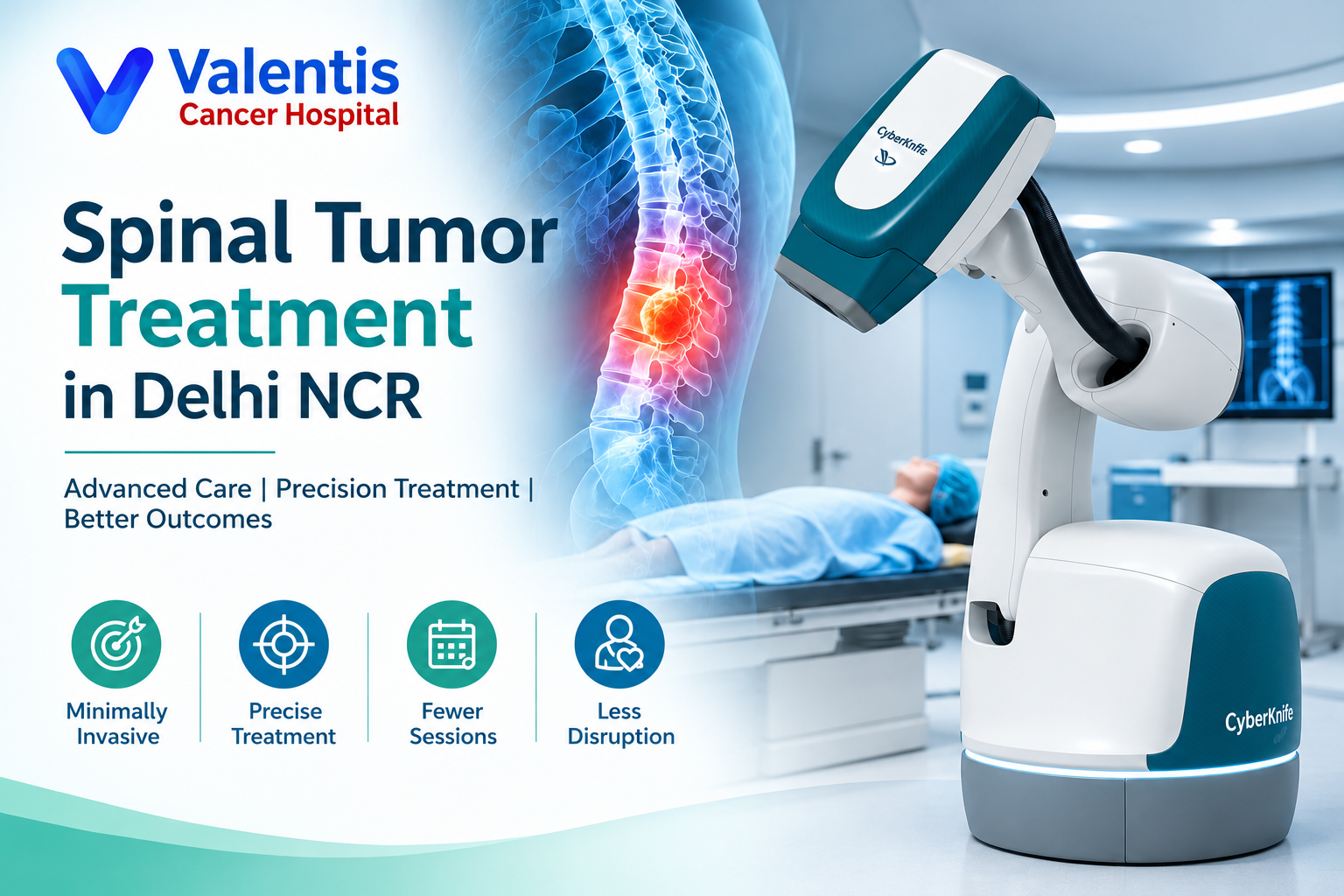
A spine tumor is an abnormal growth of cells that develops in or around the spinal column. It can affect the vertebrae, spinal cord, or surrounding tissues and may cause symptoms ranging from persistent back pain to weakness, numbness, and difficulty walking. Early diagnosis and appropriate treatment are essential to help manage the tumor, protect neurological function, and improve the patient’s quality of life.
For patients seeking spine tumor treatment in Delhi NCR, advances in cancer care have introduced several treatment options, including surgery, radiation therapy, chemotherapy for selected tumor types, and targeted radiation techniques such as CyberKnife. The most appropriate treatment depends on the tumor’s location, size, type, stage, and whether it originated in the spine or spread from another part of the body.
At Valentis Cancer Hospital, patients can explore cancer treatment options based on their diagnosis and individual medical requirements. Understanding the available treatments can help patients and their families make informed decisions with their treating specialists.
What Is a Spine Tumor?
A spine tumor is a growth that develops within the spinal bones, spinal cord, or tissues surrounding the spine. These tumors are broadly classified into primary and secondary tumors.
Primary spine tumors originate in the spinal column or nearby structures. They may be benign or malignant, depending on their nature.
Secondary spine tumors, also known as metastatic spine tumors, develop when cancer spreads to the spine from another organ, such as the lungs, breasts, kidneys, or prostate. Metastatic tumors are an important consideration in cancer care because the spine is a common site for the spread of certain cancers.
Regardless of the tumor type, timely medical evaluation is important, particularly when symptoms are persistent, progressive, or associated with neurological changes.
Common Symptoms of Spine Tumors
The symptoms of a spine tumor can vary according to its location, size, and effect on nearby nerves or the spinal cord. Some patients initially experience mild discomfort, while others develop more noticeable symptoms.
Common warning signs include:
- Persistent back pain: Pain that continues for an extended period or gradually worsens.
- Pain at night: Back pain that becomes more noticeable during rest or at night.
- Numbness or tingling: Unusual sensations in the arms, legs, hands, or feet.
- Muscle weakness: Reduced strength in the limbs that may affect everyday activities.
- Difficulty walking: Changes in balance, coordination, or mobility.
- Changes in bladder or bowel control: These may indicate pressure on the spinal cord or nerves and require urgent medical assessment.
These symptoms do not necessarily mean that a person has a spine tumor. However, persistent or unexplained symptoms should be evaluated by a qualified medical professional.
Important: New or rapidly worsening limb weakness, difficulty walking, or loss of bladder or bowel control requires emergency medical evaluation because spinal cord compression may cause permanent neurological damage if treatment is delayed.
Causes and Risk Factors of Spine Tumors
The exact cause of many primary spine tumors is not always known. Some tumors are associated with genetic conditions, while others develop without an identifiable risk factor.
Secondary spine tumors occur when cancer cells spread from a primary tumor elsewhere in the body through the bloodstream or other pathways.
Factors that may influence the risk of certain spinal tumors include:
- A previous diagnosis of cancer.
- Certain inherited genetic conditions.
- A family history of specific tumor-related disorders.
- The spread of cancer from another organ.
Having a risk factor does not mean that an individual will develop a spine tumor. A medical evaluation is necessary to determine the underlying cause of symptoms and identify the appropriate treatment.
Diagnosis of Spine Tumors
Accurate diagnosis is an essential first step when planning spine tumor treatment in Delhi NCR. Doctors may recommend several investigations to understand the nature and extent of the tumor.
1. MRI Scan
Magnetic resonance imaging (MRI) provides detailed images of the spinal cord, nerves, and surrounding soft tissues. It helps doctors identify the tumor’s location and assess whether it is compressing nearby structures.
2. CT Scan
A computed tomography (CT) scan provides detailed images of the spinal bones. It can help identify bone destruction, structural changes, and other abnormalities associated with a tumor.
3. Biopsy
In selected cases, a biopsy may be required to determine the exact tumor type. The biopsy method and timing depend on the tumor’s location and the overall treatment plan.
4. Additional Investigations
Doctors may recommend blood tests, PET-CT scans, or other investigations depending on the suspected tumor type and whether cancer may have spread from another part of the body.
The results help the medical team determine whether surgery, radiation therapy, systemic treatment, or a combination of approaches may be appropriate.
Spine Tumor Treatment in Delhi NCR: Available Options
Treatment for a spine tumor must be individualized. Factors such as tumor type, spinal stability, neurological symptoms, previous treatments, and the patient’s general health all influence the treatment plan.
1. Surgical Treatment
Surgery may be recommended when a tumor can be removed safely, when tissue is needed for diagnosis, or when the tumor is compressing the spinal cord or nerves.
The goals of surgery may include removing as much of the tumor as safely possible, relieving pressure on the spinal cord, obtaining tissue for examination, and stabilizing the spine when necessary.
Not every patient requires surgery. The decision depends on the tumor’s characteristics and the expected benefits and risks of the procedure.
2. Radiation Therapy
Radiation therapy uses high-energy radiation to damage cancer cells and control tumor growth. It may be recommended for certain primary spinal tumors and for metastatic tumors that cause pain or threaten neurological function.
Radiation treatment may be used after surgery, instead of surgery in selected cases, or as part of a combined treatment plan.
3. Chemotherapy and Other Systemic Treatments
Some tumors respond to chemotherapy, targeted therapy, immunotherapy, or other systemic treatments. These options depend on the specific cancer type and whether it has spread to other parts of the body.
For metastatic spinal tumors, the treatment plan may address both the spinal lesion and the primary cancer.
4. Pain Management and Rehabilitation
Managing symptoms is an important part of comprehensive cancer care. Depending on the patient’s condition, the care team may recommend appropriate pain relief, physical rehabilitation, mobility support, and follow-up imaging.
Rehabilitation should be planned carefully, particularly when the spine is weakened or the spinal cord is under pressure.
CyberKnife Treatment for Spine Tumors
CyberKnife treatment for spine tumors is an advanced form of stereotactic radiosurgery that delivers highly focused radiation to a defined target. Despite the term radiosurgery, CyberKnife treatment does not involve a surgical incision.
The system uses image guidance and robotic positioning to direct radiation beams toward the tumor from different angles. This allows radiation to be concentrated on the treatment target while helping limit exposure to surrounding healthy tissues.
CyberKnife may be considered for selected patients with primary or metastatic spine tumors, depending on the tumor’s size, location, radiation sensitivity, and proximity to the spinal cord.
How Does CyberKnife Treatment Work?
The treatment process generally involves the following steps:
1. Detailed imaging: MRI and CT scans help the medical team identify the tumor and map the treatment area.
2. Individualized treatment planning: Specialists use the imaging information to develop a radiation plan based on the tumor’s characteristics and nearby sensitive structures.
3. Precise radiation delivery: The CyberKnife system delivers focused radiation according to the approved treatment plan.
4. Follow-up assessment: Doctors evaluate the patient’s response through clinical reviews and imaging at appropriate intervals.
The number of sessions varies according to the tumor and treatment plan. Some patients may receive treatment over several sessions rather than a single session.
Benefits of CyberKnife for Selected Patients
Potential advantages of CyberKnife treatment include:
- Non-invasive treatment: No surgical incision is required to deliver the radiation.
- High targeting precision: Image-guided technology helps direct radiation toward the intended tumor.
- Protection of surrounding tissues: Treatment planning aims to limit radiation exposure to nearby healthy structures, including the spinal cord.
- Outpatient treatment in many cases: Patients may not need an overnight hospital stay solely for the radiation procedure.
- A potential option for complex cases: It may be considered for certain tumors that are difficult to treat surgically or for spinal tumors that have returned after previous treatment.
However, CyberKnife is not suitable for every spine tumor. It does not immediately remove a tumor or relieve all forms of spinal cord compression. Patients with spinal instability or severe neurological compression may require surgery or another urgent intervention before radiation treatment can be considered.
A multidisciplinary team should determine whether CyberKnife is appropriate for an individual patient.
Why Consider Valentis Cancer Hospital for Spine Tumor Treatment in Delhi NCR?
Choosing a cancer treatment center involves considering diagnostic facilities, treatment options, specialist expertise, and the coordination of care.
Patients exploring spine tumor treatment in Delhi NCR can visit the official website of Valentis Cancer Hospital to learn more about its cancer care services and available treatment options.
The treating team can help patients understand their diagnosis, review relevant imaging and biopsy reports, and discuss whether surgery, conventional radiation therapy, CyberKnife, or a combined approach may be appropriate.
Before starting treatment, patients should discuss the expected benefits, possible side effects, treatment duration, follow-up requirements, and alternatives with their medical team.
Recovery and Follow-Up After Spine Tumor Treatment
Recovery depends on the type of tumor, the treatment received, and the patient’s overall health. Some patients experience improvement in pain following treatment, while neurological recovery may take longer and can vary considerably.
Regular follow-up is important because it helps doctors assess tumor response, monitor symptoms, and identify potential complications.
Patients should follow their medical team’s instructions regarding physical activity, rehabilitation, medication, and repeat imaging. New or worsening neurological symptoms should be reported immediately.
A balanced diet, adequate rest, appropriate activity, and emotional support can also help patients manage the challenges associated with cancer treatment.
Frequently Asked Questions (FAQs)
1. What is the best treatment for a spine tumor in Delhi NCR?
The best treatment depends on the tumor’s type, location, size, and effect on the spinal cord. Options may include surgery, radiation therapy, CyberKnife, chemotherapy, or a combination of treatments.
2. Can CyberKnife treat spine tumors without surgery?
Yes. CyberKnife delivers focused radiation without requiring a surgical incision. It may be suitable for selected primary or metastatic spine tumors, but it is not appropriate for every case.
3. Is CyberKnife treatment painful?
The radiation delivery itself is generally painless. However, individual experiences may vary, and some patients may develop temporary side effects. The treatment team can explain what to expect.
4. How many CyberKnife sessions are required for a spine tumor?
The number of sessions depends on the tumor’s size, location, type, and treatment plan. Some patients need one session, while others require several sessions.
5. Can a spine tumor be cured?
Some benign and malignant spinal tumors can be treated successfully, but outcomes depend on the tumor type, its extent, and the available treatment options. Metastatic tumors may require long-term disease control rather than complete eradication.
6. When should I consult a specialist for a possible spine tumor?
Consult a medical professional if you have persistent, unexplained back pain or progressive neurological symptoms. Seek emergency care for new limb weakness, difficulty walking, or loss of bladder or bowel control.
Spine tumors require accurate diagnosis and a carefully planned treatment approach to manage the disease and protect neurological function. For patients seeking spine tumor treatment in Delhi NCR, treatment options may include surgery, radiation therapy, systemic cancer treatment, and advanced techniques such as CyberKnife.
CyberKnife offers a non-invasive, highly focused radiation option for selected spinal tumors. Its suitability depends on the tumor’s characteristics and the patient’s medical condition, making specialist assessment essential.
Patients can explore available cancer care services through Valentis Cancer Hospital and discuss their diagnostic reports, treatment choices, and eligibility for CyberKnife with the treating medical team. Early evaluation and appropriate follow-up can play an important role in achieving the best possible outcome.
