

Pancreatic cancer is a serious disease that begins when abnormal cells in the pancreas grow uncontrollably. Because the pancreas is located deep inside the abdomen, pancreatic cancer may not cause obvious symptoms in its early stages. This can make awareness of pancreatic cancer risk factors especially important.
Although having a risk factor does not mean that a person will definitely develop pancreatic cancer, understanding these factors can help people make healthier choices and seek medical advice when necessary. Age, smoking, family history, inherited genetic conditions, chronic pancreatitis, diabetes, obesity and certain lifestyle factors have all been associated with pancreatic cancer.
What Are the Major Pancreatic Cancer Risk Factors?
Several factors may increase the likelihood of developing pancreatic cancer. Some can be modified through lifestyle changes, while others cannot.
1. Smoking and Tobacco Use
Smoking is one of the most significant preventable risk factors associated with pancreatic cancer. Tobacco smoke contains numerous chemicals that can damage cells and DNA, potentially contributing to abnormal cell growth.
Quitting smoking can reduce the health risks associated with tobacco and is an important step toward improving overall health.
2. Increasing Age
The risk of pancreatic cancer generally increases with age. While pancreatic cancer can occur in younger adults, it is more frequently diagnosed in older individuals.
Age itself cannot be changed, but people who are older and have additional risk factors should discuss persistent or unusual symptoms with a healthcare professional.
3. Family History
Having a close family member with pancreatic cancer may increase an individual’s risk. A particularly strong family history of pancreatic or certain other cancers may suggest an inherited genetic predisposition.
People with multiple relatives affected by cancer should discuss their family history with a doctor. Genetic counseling may be recommended in selected situations.
4. Inherited Genetic Conditions
Certain inherited genetic changes can increase the risk of pancreatic cancer. Genetic mutations involving genes such as BRCA1, BRCA2, PALB2, ATM and others have been associated with increased cancer risk.
Genetic testing is not necessary for everyone, but it may be considered for individuals with a significant personal or family history of cancer.
5. Chronic Pancreatitis
Chronic pancreatitis is long-term inflammation of the pancreas. Persistent inflammation can damage pancreatic tissue and is associated with an increased risk of pancreatic cancer.
People diagnosed with chronic pancreatitis should follow their doctor’s recommendations for monitoring and treatment.
6. Diabetes
Diabetes is associated with pancreatic cancer, although the relationship is complex. Diabetes may be a risk factor in some individuals, while newly developing diabetes can also occur in association with pancreatic cancer.
Unexplained changes in blood sugar levels or newly diagnosed diabetes, particularly when accompanied by other symptoms, should be discussed with a healthcare professional.
7. Overweight and Obesity
Being overweight or obese may increase the risk of pancreatic cancer. Maintaining a healthy body weight through regular physical activity and a balanced diet can support overall health and may help reduce the risk of several chronic diseases.
8. Heavy Alcohol Consumption
Heavy alcohol consumption can contribute to chronic pancreatitis, which is associated with an increased risk of pancreatic cancer. Limiting alcohol intake or avoiding alcohol altogether can support pancreatic and general health.
Can Pancreatic Cancer Be Prevented?
There is no guaranteed way to prevent pancreatic cancer because some risk factors, such as age and inherited genetics, cannot be changed. However, several healthy lifestyle habits may help reduce preventable risks.
These include:
- Avoiding tobacco and quitting smoking
- Maintaining a healthy body weight
- Exercising regularly
- Eating a balanced diet
- Limiting alcohol consumption
- Managing diabetes and other chronic conditions
- Discussing a strong family history of cancer with a doctor
People with significant risk factors should speak with an oncologist or other qualified healthcare professional about their individual risk.
Pancreatic Cancer Treatment in India
The treatment of pancreatic cancer depends on several factors, including the location and size of the tumor, whether the cancer has spread, the patient’s overall health and whether surgery is possible.
Depending on the individual’s condition, treatment may involve surgery, chemotherapy, radiation therapy, targeted treatment, immunotherapy in selected cases, or a combination of these approaches.
For patients researching Pancreatic Cancer Treatment in India, choosing a specialized cancer center with a multidisciplinary oncology team can be important. A multidisciplinary approach allows surgical oncologists, medical oncologists, radiation oncologists, radiologists and other specialists to work together to develop an individualized treatment plan.
CyberKnife S7 Treatment for Pancreatic Cancer
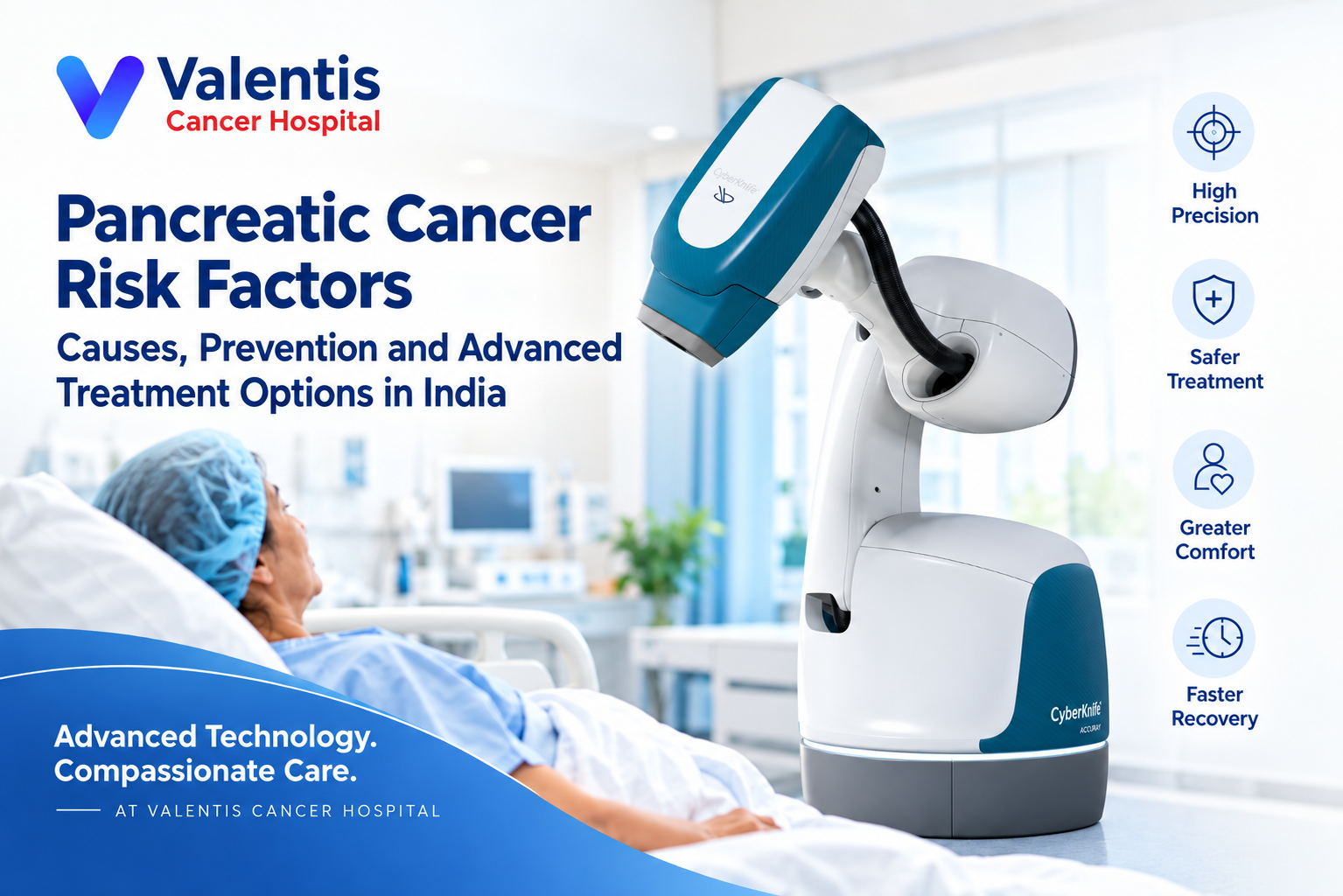
One of the advanced radiation treatment options available for selected pancreatic cancer patients is CyberKnife S7 robotic radiation therapy.
CyberKnife S7 delivers highly focused radiation using a robotic system with image guidance and motion tracking. This is particularly relevant for pancreatic tumors because the pancreas is located close to sensitive organs, including the stomach and intestines, and can move with normal breathing.
According to Valentis Cancer Hospital, CyberKnife S7 can deliver stereotactic body radiation therapy (SBRT) to selected pancreatic tumors with high precision. The hospital states that it may be considered for locally advanced or medically inoperable pancreatic cancers and can also be used as part of a multidisciplinary treatment plan alongside chemotherapy, surgery and other therapies.
The system continuously tracks tumor movement and adjusts radiation delivery, helping the treatment team focus radiation on the intended target. Valentis states that pancreatic CyberKnife treatments may be completed in as few as five sessions in appropriate cases.
However, CyberKnife S7 is not suitable for every pancreatic cancer patient. The decision depends on tumor size, location, stage, surrounding organs, previous treatments and the patient’s overall health. A radiation oncologist and multidisciplinary cancer team should determine whether this approach is appropriate.
Choosing a Cancer Hospital in Delhi NCR
Patients searching for the Best Cancer Hospital in Delhi NCR or a Cancer Hospital in Delhi NCR should consider factors beyond technology alone. Important considerations include experienced oncology specialists, multidisciplinary treatment planning, modern diagnostic facilities, radiation therapy options, surgical expertise, chemotherapy and supportive care.
Patients may also compare hospitals based on their specific cancer type and the treatment options available for their individual condition.
For people searching online for a Cancer Hospital in India, it is important to remember that there is no single treatment that is best for every patient. The most appropriate treatment depends on the cancer’s stage, biology and the individual’s overall health.
Best Cancer Treatment in India: Why Personalized Care Matters
The term Best Cancer Treatment in India can mean different things for different patients. For one patient, surgery may be the primary treatment; for another, chemotherapy and radiation may be more appropriate. In selected cases, advanced precision radiation technologies such as CyberKnife S7 may form part of the treatment plan.
Therefore, patients should seek an individualized assessment rather than choosing a treatment based solely on a technology or promotional claim.
Valentis Cancer Hospital for Pancreatic Cancer Treatment
Valentis Cancer Hospital in Meerut, Uttar Pradesh, provides comprehensive cancer care, including medical oncology, surgical oncology and radiation oncology. The hospital also offers advanced radiation technologies, including CyberKnife S7 Robotic Radiation Therapy.
For selected pancreatic cancer patients, Valentis Cancer Hospital states that CyberKnife S7 can provide non-invasive SBRT with highly precise radiation delivery and real-time motion synchronization. The hospital describes it as an option for certain locally advanced and medically inoperable pancreatic cancers, as well as a treatment that can be integrated with chemotherapy, surgery and other therapies when appropriate.
Patients and families looking for advanced pancreatic cancer care can consult the oncology team at Valentis Cancer Hospital to understand their diagnosis, available treatment options and whether CyberKnife S7 is appropriate for their specific condition.
