

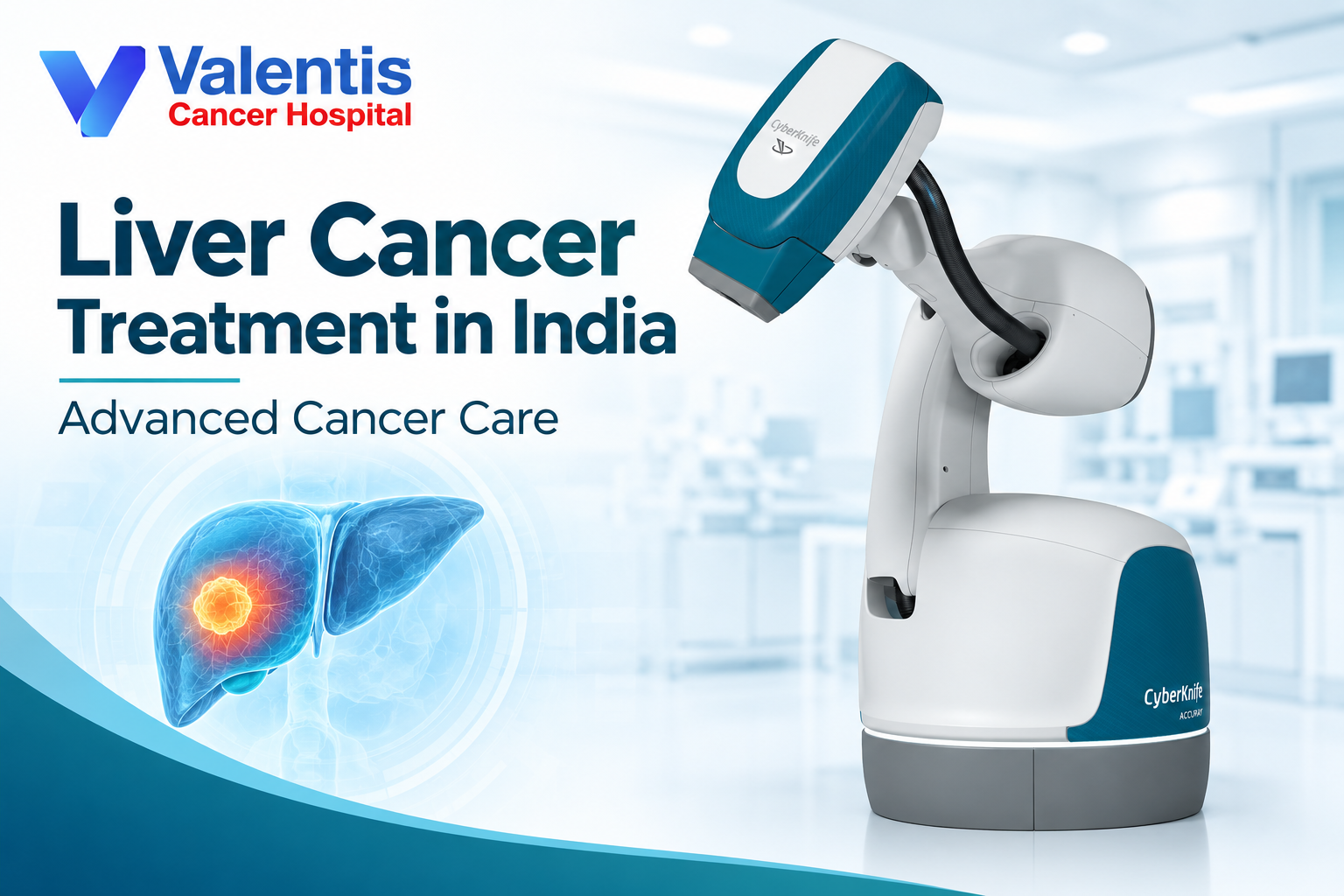
A diagnosis of liver cancer can be challenging for patients and their families. However, advances in cancer diagnosis, surgery, radiation oncology, interventional oncology, targeted therapy, and immunotherapy have significantly expanded the treatment options available today. For patients looking for liver cancer treatment in India, specialized cancer centres can provide personalized treatment plans based on the type and stage of cancer.
Treatment depends on several factors, including the size and number of tumors, whether the cancer has spread, liver function, the presence of cirrhosis or other liver disease, overall health, and previous treatments. Depending on the individual case, treatment may include surgery, liver transplantation, ablation, transarterial therapies, radiation therapy, targeted therapy, immunotherapy, or a combination of these approaches.
What Is Liver Cancer?
Liver cancer occurs when abnormal cells in the liver begin to grow uncontrollably. The most common primary liver cancer in adults is hepatocellular carcinoma (HCC). Other types include intrahepatic cholangiocarcinoma and less common liver tumors.
It is important to distinguish primary liver cancer from metastatic liver cancer. Metastatic liver cancer occurs when cancer originating in another organ spreads to the liver and generally requires a different treatment strategy.
Early diagnosis can provide more treatment opportunities. Patients with localized disease may, in selected circumstances, be candidates for treatments intended to remove or destroy the tumor.
Diagnosis and Staging of Liver Cancer
A liver cancer diagnosis usually involves a combination of medical history, physical examination, blood tests, liver function assessment, tumor-marker testing, and imaging.
Doctors may recommend ultrasound, contrast-enhanced CT, MRI, or other investigations to determine the size and location of the tumor and whether blood vessels or other organs are involved. Staging is an essential part of treatment planning because it helps doctors determine whether surgery, local treatment, radiation, systemic therapy, or a combination may be appropriate.
The underlying condition of the liver is also extremely important. A patient with cirrhosis or reduced liver function may have different treatment options from someone with otherwise healthy liver tissue.
Liver Cancer Treatment Options in India
There is no single treatment that is appropriate for every liver cancer patient. A multidisciplinary oncology team evaluates the individual case before recommending treatment.
1. Liver Cancer Surgery
For selected patients with localized tumors and adequate liver function, liver cancer surgery may be considered.
A partial hepatectomy involves removing the part of the liver containing the tumor while preserving sufficient healthy liver tissue. Whether surgery is possible depends on tumor location, size, number of tumors, involvement of blood vessels, liver function, and the patient’s overall health.
2. Liver Transplantation
Liver transplantation may be an option for carefully selected patients, particularly those with liver cancer associated with significant underlying liver disease.
A transplant replaces the diseased liver with a donor liver and may address both the cancer and the underlying liver condition. Eligibility depends on factors such as tumor characteristics, liver function, overall health, and applicable transplant criteria.
3. Ablation Therapy
For certain patients, especially those with smaller tumors, local tumor ablation may be considered.
Techniques such as radiofrequency ablation (RFA) and microwave ablation use heat to destroy cancer cells. These procedures can be useful when surgery is not suitable or when a localized treatment is preferred.
Other transarterial and interventional techniques may also be considered depending on the patient’s tumor characteristics and liver function.
Liver Cancer CyberKnife Treatment in India
One of the important developments in modern radiation oncology is the use of highly precise radiation delivery systems for appropriately selected tumors.
Liver cancer CyberKnife treatment in India may be considered for selected patients who require highly focused radiation treatment and for whom surgery may not be suitable. CyberKnife is a robotic, image-guided radiation system designed to deliver radiation accurately to a defined treatment target.
For liver tumors, treatment planning requires careful assessment because the liver moves with breathing and because healthy liver tissue needs to be protected. Advanced image guidance and motion-management techniques can help radiation specialists deliver focused treatment while minimizing unnecessary radiation exposure to surrounding tissues.
CyberKnife is not appropriate for every liver cancer patient. Suitability depends on factors such as tumor size and location, liver function, previous treatments, nearby organs, and the overall treatment plan. An experienced radiation oncologist should evaluate the patient’s scans and clinical history before recommending this approach.
For patients searching for CyberKnife liver cancer treatment in India, it is therefore important to choose a centre with appropriate radiation technology and an oncology team experienced in evaluating complex cases.
Liver Cancer Treatment in Delhi NCR
Patients searching for liver cancer treatment in Delhi NCR often look for advanced cancer care that combines modern technology with experienced specialists and comprehensive treatment planning.
Delhi NCR is a major healthcare destination with access to multidisciplinary oncology services, advanced imaging, radiation oncology, medical oncology, surgical oncology, and supportive cancer care.
When choosing a cancer centre, patients should consider the availability of appropriate diagnostic facilities, experienced oncology specialists, multidisciplinary treatment planning, advanced radiation technology, surgical expertise, and follow-up care.
For patients living in Delhi, Noida, Ghaziabad, Faridabad, Gurgaon, Meerut, and surrounding areas, accessibility can also be an important consideration, particularly when radiation therapy requires multiple treatment visits.
Targeted Therapy and Immunotherapy
For advanced or unresectable hepatocellular carcinoma, systemic treatment may be recommended. Depending on the patient’s condition, doctors may consider targeted therapy or immunotherapy.
These treatments work differently from conventional chemotherapy. Targeted medicines act on specific biological pathways involved in cancer growth, while immunotherapy helps the immune system recognize and attack cancer cells.
The choice of systemic treatment depends on several factors, including liver function, disease extent, previous treatment, overall health, and potential side effects. Patients should discuss the expected benefits and risks of each treatment option with their oncologist.
Why Personalized Treatment Is Important
Liver cancer can be complex because doctors must manage both the cancer and the condition of the liver. Cirrhosis, hepatitis, impaired liver function, and other medical conditions can influence which treatments are safe and appropriate.
A multidisciplinary approach to liver cancer treatment may involve surgical oncologists, medical oncologists, radiation oncologists, radiologists, interventional specialists, hepatologists, and other healthcare professionals.
The objective of treatment can vary from patient to patient. In some cases, the goal may be complete removal or destruction of the cancer. In other cases, treatment may focus on controlling disease progression, reducing symptoms, extending survival, and maintaining quality of life.
How to Choose the Right Liver Cancer Treatment Centre
If you are researching liver cancer treatment in India or liver cancer treatment in Delhi NCR, consider a hospital that can provide a comprehensive evaluation rather than focusing on a single treatment technology.
Patients should ask about:
- Experience of the oncology team
- Availability of multidisciplinary treatment planning
- Diagnostic and staging facilities
- Surgical and medical oncology services
- Advanced radiation therapy options
- Availability of interventional oncology
- Supportive and follow-up care
- Whether treatment can be personalized to liver function and tumor characteristics
Most importantly, patients should understand that the most advanced technology is not automatically the best treatment for every individual. The appropriate treatment should be selected after a detailed evaluation by qualified cancer specialists.
Valentis Cancer Hospital for Liver Cancer Treatment
Valentis Cancer Hospital in Meerut, Uttar Pradesh, provides comprehensive cancer care with services spanning medical oncology, surgical oncology, radiation oncology, diagnostic imaging, and advanced radiation treatment.
The hospital offers advanced radiation technologies, including CyberKnife S7 and focuses on personalized cancer treatment. Its location in Meerut also makes it a potential option for patients from the wider Delhi NCR and Western Uttar Pradesh region who are seeking specialized cancer care.
For patients exploring liver cancer CyberKnife treatment in India, the suitability of CyberKnife should be assessed on an individual basis after reviewing the tumor’s size, location, liver function, previous treatment, and overall health.
If you or a family member has been diagnosed with liver cancer, consult an experienced oncology team to understand the available treatment options and determine the most appropriate approach for your specific condition.
