

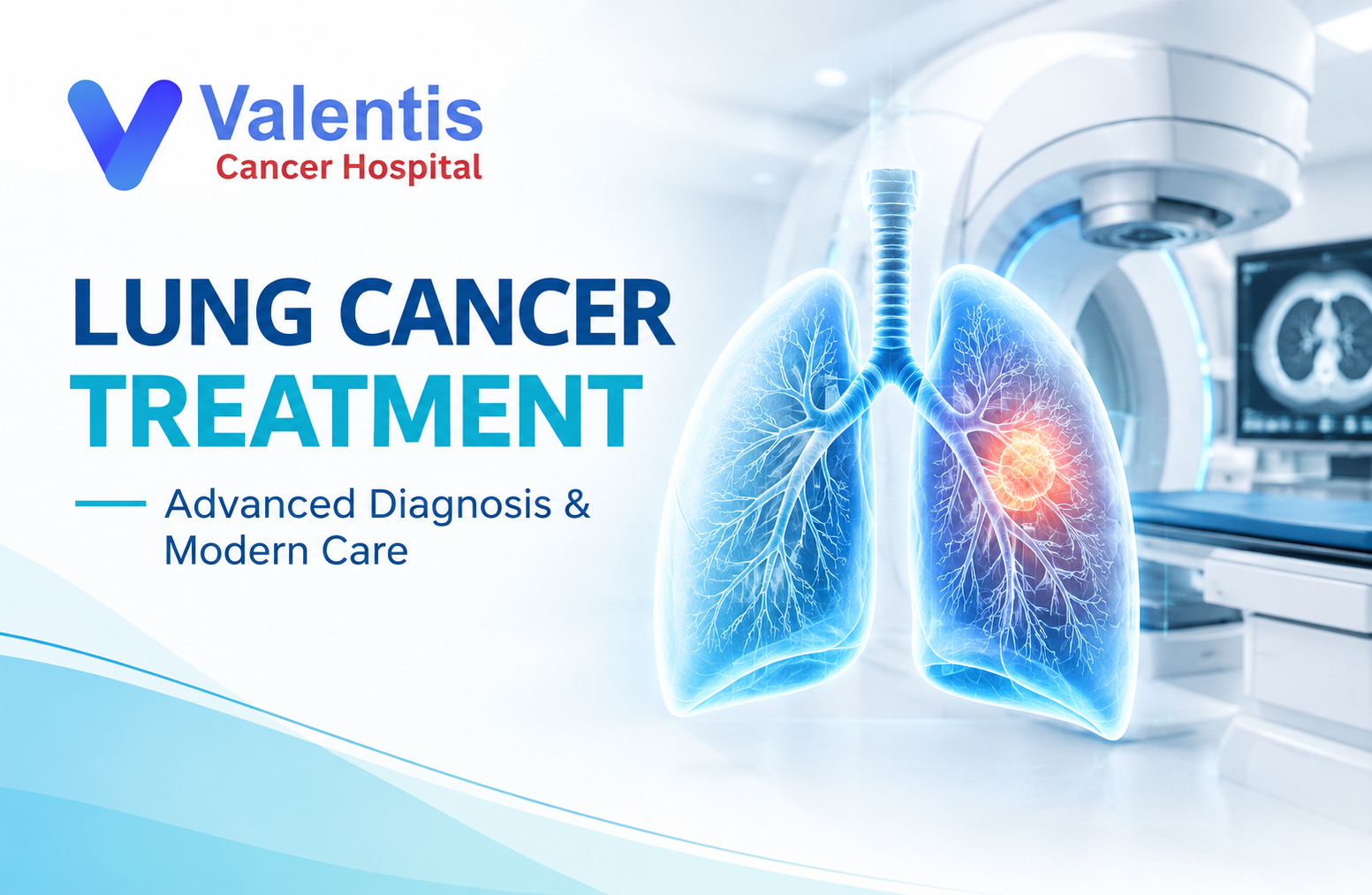
Lung cancer is one of the most common and serious types of cancer worldwide. It develops when abnormal cells in the lungs grow uncontrollably, forming tumors that can affect normal breathing and may spread to other parts of the body. Early diagnosis and timely treatment play an important role in improving treatment outcomes and quality of life.
With advancements in medical science, Lung Cancer Treatment in India has evolved significantly. Patients now have access to advanced diagnostic technologies, targeted therapies, immunotherapy, robotic radiation treatment, chemotherapy, and surgical procedures. These treatment options allow doctors to develop personalized treatment plans based on the patient’s cancer stage, type, overall health, and medical requirements.
For patients looking for Lung Cancer Treatment in Delhi NCR, choosing a cancer hospital equipped with modern technology and experienced oncology specialists is an important step. Valentis Cancer Hospital provides comprehensive cancer care with advanced treatment facilities, including CyberKnife S7 robotic radiation therapy.
Understanding Lung Cancer
Lung cancer begins when cells in the lungs develop abnormal changes and multiply uncontrollably. These abnormal cells can form tumors and interfere with the normal functioning of lung tissues.
Lung cancer is broadly classified into two major types:
1. Non-Small Cell Lung Cancer (NSCLC)
Non-small cell lung cancer is the most common type, accounting for approximately 85% of lung cancer cases. It includes adenocarcinoma, squamous cell carcinoma, and large cell carcinoma.
2. Small Cell Lung Cancer (SCLC)
Small cell lung cancer is less common but generally grows and spreads more rapidly than non-small cell lung cancer. It is often associated with a history of smoking.
Identifying the exact type of lung cancer is essential because treatment recommendations vary depending on the cancer’s characteristics.
Common Symptoms of Lung Cancer
Lung cancer may not produce noticeable symptoms during its early stages. As the disease progresses, patients may experience:
- Persistent cough that does not improve.
- Coughing up blood or blood-stained mucus.
- Chest pain or discomfort.
- Shortness of breath.
- Unexplained weight loss.
- Frequent respiratory infections.
- Persistent fatigue and weakness.
- Hoarseness or changes in voice.
- Loss of appetite.
These symptoms do not necessarily indicate lung cancer, as they can occur with other medical conditions. However, persistent or unexplained symptoms should be evaluated by a qualified medical professional.
Major Risk Factors for Lung Cancer
Several factors can increase the risk of developing lung cancer.
Smoking: Tobacco smoking is one of the leading risk factors for lung cancer. Both active smoking and exposure to second-hand smoke can increase the risk.
Air Pollution: Long-term exposure to polluted air and harmful environmental particles may contribute to lung cancer development.
Occupational Exposure: Exposure to asbestos, arsenic, diesel exhaust, and certain industrial chemicals can increase cancer risk.
Family History: Individuals with a family history of lung cancer may have an increased risk.
Radon Exposure: Prolonged exposure to radon gas can increase the likelihood of developing lung cancer.
Avoiding tobacco, reducing exposure to harmful substances, and seeking medical advice for persistent respiratory symptoms can support better lung health.
Advanced Diagnostic Methods for Lung Cancer
Accurate diagnosis is the foundation of effective lung cancer treatment. Doctors recommend different investigations depending on the patient’s symptoms and clinical condition.
Common diagnostic procedures include:
- Chest X-Ray: Helps identify abnormal areas or suspicious masses in the lungs.
- CT Scan: Provides detailed images of lung structures and helps evaluate tumors.
- PET-CT Scan: Helps assess cancer activity and identify possible spread to other organs.
- Bronchoscopy: Allows doctors to examine the airways and collect tissue samples.
- Biopsy: Confirms the presence and type of cancer through laboratory examination.
- Molecular Testing: Identifies specific genetic changes that may help determine whether targeted therapy is suitable.
These investigations help specialists establish the cancer stage and select an appropriate treatment strategy.
Lung Cancer Treatment in India: Available Treatment Options
Modern Lung Cancer Treatment in India involves several approaches. The treatment plan depends on the cancer type, stage, tumor location, genetic characteristics, and patient’s overall health.
1. Lung Cancer Surgery
Surgery may be recommended for selected patients with early-stage non-small cell lung cancer. The objective is to remove the cancerous tissue while preserving as much healthy lung function as possible.
Depending on the tumor’s location and size, doctors may recommend a wedge resection, segmentectomy, lobectomy, or pneumonectomy.
2. Chemotherapy
Chemotherapy uses specialized medicines to destroy cancer cells or control their growth. It may be recommended before surgery, after surgery, or as the primary treatment for certain advanced lung cancers.
3. Radiation Therapy
Radiation therapy uses high-energy radiation beams to damage cancer cells and prevent them from multiplying. It may be used independently or alongside chemotherapy and surgery.
Advanced radiation technologies help doctors deliver radiation more precisely while reducing exposure to surrounding healthy tissues.
4. Targeted Therapy
Targeted therapy focuses on specific genetic changes or proteins responsible for cancer cell growth. Molecular testing helps identify patients who may benefit from these medicines.
5. Immunotherapy
Immunotherapy helps the body’s immune system recognize and fight cancer cells. It may be recommended for certain patients depending on cancer type, stage, biomarker results, and previous treatments.
6. Lung Cancer Treatment with CyberKnife
Lung Cancer Treatment with CyberKnife is an advanced precision radiation approach that may be suitable for selected patients with localized lung tumors.
CyberKnife S7 is a non-invasive robotic radiation therapy system that delivers highly focused radiation to the treatment target. It uses advanced imaging, robotic movement, and real-time tumor tracking to help direct radiation accurately, including when the tumor moves during breathing.
For selected patients, particularly those who cannot undergo surgery or require a precision radiation approach, CyberKnife S7 may be considered as part of the treatment plan.
Potential advantages include:
- Non-invasive treatment without surgical incisions.
- Highly precise radiation delivery.
- Real-time imaging and tumor-motion tracking.
- Reduced radiation exposure to nearby healthy tissues.
- Shorter treatment courses in selected cases.
- Convenient outpatient treatment.
The number of sessions depends on the tumor’s characteristics and the specialist’s treatment plan. CyberKnife is not suitable for every lung cancer patient, and an experienced radiation oncologist must evaluate the patient’s condition before recommending it.
Lung Cancer Treatment in Delhi NCR at Valentis Cancer Hospital
Patients searching for Lung Cancer Treatment in Delhi NCR often look for a hospital that combines advanced cancer technology, specialist expertise, accurate diagnosis, and personalized treatment planning.
Valentis Cancer Hospital, located in Meerut, Uttar Pradesh, provides multidisciplinary cancer care for patients from Meerut, Delhi NCR, and other parts of India.
The hospital focuses on combining modern technology with personalized treatment planning.
Key features include:
- Advanced CyberKnife S7 robotic radiation therapy.
- Modern cancer diagnostic facilities, including PET-CT.
- Multidisciplinary oncology care.
- Personalized treatment planning.
- Advanced radiation treatment technologies.
- Supportive care throughout the treatment journey.
Valentis Cancer Hospital also offers CyberKnife S7 treatment for selected lung tumors, providing an additional precision radiation option for eligible patients.
Can Lung Cancer Be Treated Successfully?
Yes, many lung cancer patients can benefit from available treatment options, particularly when the disease is detected early.
Early-stage lung cancer may be treated with surgery or precision radiation therapy, depending on the patient’s condition. Locally advanced disease may require a combination of chemotherapy, radiation, immunotherapy, or surgery in selected cases.
Advanced lung cancer can also be managed with systemic treatments such as targeted therapy and immunotherapy when appropriate.
Treatment outcomes depend on several factors, including cancer stage, tumor biology, overall health, and response to treatment.
Why Choose Valentis Cancer Hospital for Lung Cancer Treatment?
Choosing the right cancer hospital is an important decision for patients and their families. Comprehensive cancer care requires experienced specialists, advanced diagnostic facilities, modern treatment technologies, and personalized medical attention.
Valentis Cancer Hospital focuses on providing patient-centred cancer care supported by modern technology and a multidisciplinary approach.
Its advanced CyberKnife S7 robotic radiation therapy system offers a precision-based treatment option for eligible patients with selected lung tumors. The hospital emphasizes individualized treatment planning to help patients understand their diagnosis and available treatment options.
Consult Valentis Cancer Hospital for Advanced Lung Cancer Treatment
Advancements in medical technology have transformed Lung Cancer Treatment in India, providing patients with access to modern diagnostic methods and personalized treatment approaches. From surgery and chemotherapy to immunotherapy, targeted therapy, and advanced radiation technologies, several options are available depending on individual medical needs.
For patients exploring Lung Cancer Treatment in Delhi NCR, Valentis Cancer Hospital offers multidisciplinary cancer care supported by advanced technologies, including CyberKnife S7 robotic radiation therapy.
With Lung Cancer Treatment with CyberKnife, eligible patients may benefit from a precise, non-invasive radiation treatment approach. However, the most appropriate treatment should always be determined after a detailed medical evaluation.
Valentis Cancer Hospital, located in Meerut, Uttar Pradesh, is committed to providing advanced and patient-focused cancer care through modern diagnostic facilities, experienced cancer specialists, and innovative treatment technologies. The hospital caters to patients from Meerut, Delhi NCR, and other parts of India seeking comprehensive cancer treatment.
If you or a loved one has been diagnosed with lung cancer, consult Valentis Cancer Hospital to explore available treatment options and receive expert medical guidance for a personalized cancer care plan.
